LIVE TRACKING
Schedule
Race begins and ends in the town of South Fork, CO at Brown Memorial Park (86 CR 15, South Fork, CO 81154)
Wednesday, August 25, 2027 (These are tentative times and are subject to change as we get closer)
PRE-RACE MEETING: 4pm at Brown Memorial Park (86 CR 15, South Fork, CO 81154)
PACKET PICK UP & DROP BAG DROP-OFF: 4:30pm - 6pm at Brown Memorial Park (86 CR 15, South Fork, CO 81154)
GEAR CHECK: Please bring all required gear in your pack during packet pickup
Thursday, August 26, 2027
RACE START: 8am
Monday, August 30, 2027
RACE ENDS: 8:00pm (108 hours)
Qualifications for La Garita 200
From the time your are young, you are told what to do (or NOT to do) - don’t climb so high in the tree, don’t run down that hill you’ll trip and fall, don’t jump your bike over that ditch, don't go into the woods too far you’ll get lost and on and on and on. Well we think adventures are fun! Who are we to say no, you cannot try to push yourself and see what your mind and body can do. We welcome anyone who wants to challenge themselves. Heck, many of our early races were disasters that we struggled through because we had no clue what we were doing; but we did it, we learned and we created memories. Now that is not to say we do not care about you and your well being. The La Garita is not easy. You do need to be self sufficient and should have experience in the outdoors over rugged terrain, varying and ever changing weather conditions and wild animal encounters. So please join us out on the trail no matter your level - every one needs to begin their story somewhere.
Required Gear
As with most mountainous and higher elevation races, the weather can change drastically at any time. If you are not used to elevation, you may be moving slower than anticipated so make sure you are prepared for anything at any time. Even though it’s August, nights will get cold. Please bring all required gear in your pack during packet pickup. We will also be checking gear randomly throughout the race. Not having the required gear can lead to disqualification. Pacers must also carry the required gear (minus the tracker).
Devise with GPX track of the course
SPOT Tracker (provided by race)
Long sleeve insulating layer (we highly suggest a puffy or insulating jacket - IT GETS COLD)
Waterproof jacket with hood
Hat or Buff
Gloves
Warm Pants or Tights (covers entire leg)
Emergency Bivy
Headlamp or Other Light Source
Extra Batteries for Light Source
Extra Battery Bank for Phone or Watch
Cell Phone
Ability to carry 3L of water (you do not have to carry that much at all times, but some sections are longer than others and require you to carry that if needed)
Some sort of water filtration ability or treatment - some section creeks may be dry, but other areas there are sources available if needed
500 calories of food
additional Recommended Gear
You are not required to carry or have this gear, but having access to it in drop bags may be helpful.
Trekking Poles
Sunscreen
Bug Spray
Ear Plugs for Sleeping
Sleeping Mask
Extra Blanket if you plain to sleep at certain aid stations that are not accessible by crew or if you have no crew
CORSAR CARD
We do require that all runners (and pacers) must purchase a CORSAR card. Accidents happen no matter how careful one is, and as outdoor explorers we love and appreciate those who risk their well-being to help us in times of need.
The card costs $3 for one year or $12 for five years. By purchasing the Colorado Outdoor Recreation Search and Rescue (CORSAR), you are contributing to the Search and Rescue Fund. This allows for local SAR teams and organizations to be partially reimbursed for their costs incurred during rescues.
Note that this is NOT an insurance card and will NOT reimburse individuals for medical costs and transportation in case of an emergency.
You will be asked to show the card at packet pick-up, but no need to carry it during the race. If you have a current CO fishing license, you do not need to purchase a CORSAR card.
Purchase Card Here
Drop Bags
Please keep drop bags to a reasonable size and only one drop bag per runner at each location. We will not transport extremely large drop bags. MAXIMUM SIZE of 25L (1525 cubic inches). You can use this link to help you calculate its volume: https://www.calculator.net/volume-calculator.html
Please see the aid station chart for drop bag locations
Drop bags must clearly be labeled with your bib #, runner name and aid station location
Drop bags should be waterproof and made of durable material that can close securely and tightly. Please no plastic bags, no coolers, no Tupperware containers and nothing with lids. Please do not have glass in your dropbag.
We are not responsible for lost or stollen material
Drop bags should be dropped off during runner check-in on Wednesday, August 18 from 4:30pm - 6:00pm. No drop bags will be accepted after this time.
Drop bags will be returned to the finish after aid stations are closed as soon as we are able. Many of these aid stations are hours away so they may not be waiting for you at the finish when you get there. Please be patient.
We will not mail drop bags.
Runner Rules
So the rules are pretty much the standard rules at all races.
You must check-in prior to the race start
No receiving aid outside of aid stations or specified locations
You must carry required gear at all times (Pacers are required to carry the same gear minus the SPOT tracker)
No muling
No course cutting or short cuts
You must check-in and check-out at each aid station. You must also let us know if you are leaving with a pacer in approved pacer sections.
Your bib must be seen at all times
If you decide to drop out, you must notify aid station personnel and turn in your bib and tracker.
Crews & Pacers must obey all rules - you are at risk of DQ for their actions (ie parking, speeding on course, rude crews, unruly dogs at AS)
No littering
No PEDS
You must obey all USFS rules - including burying waste if needed. Leave no Trace
Respect other trail users. The trails will be open to hikers, bikers, dirt bikers and ATVs. Always yield to horseback riders.
If you need medical treatment such as IVs or supplemental oxygen, you will be pulled from the race. Medical staff has final say on if a racer will be allowed to continue on.
Obey race staff - DO NOT BE RUDE - All decisions by medical personnel or aid station staff are final
Dogs are not allowed in the race. See crew rules for other dog restrictions.
Respect private property
DNFs
DNFs happen. No matter how hard you train or plan, some days it’s just not meant to be. If you have to DNF, there are a few things you need to know and do:
Please make sure to tell the person at the aid station with the clipboard. You are required to turn your bib and tracker in to that person. If you fail to turn in your tracker, you will be charged for it.
If you do not have a crew or are at a non-crew aid station, we will get you back to the finish at some point. Please be aware that this is not an easy process. Aid stations can be hours away from the start/finish and we are a small race with limited volunteers. It may take quite some time to get you back. You are more than welcome to talk to others crews to find a ride, but we are not an on-demand shuttle service.
Drop bags will be returned to the start finish as soon as possible after aid stations close. Special trips will not be made to bring drop bags of DNF’d runners ahead of time.
Awards
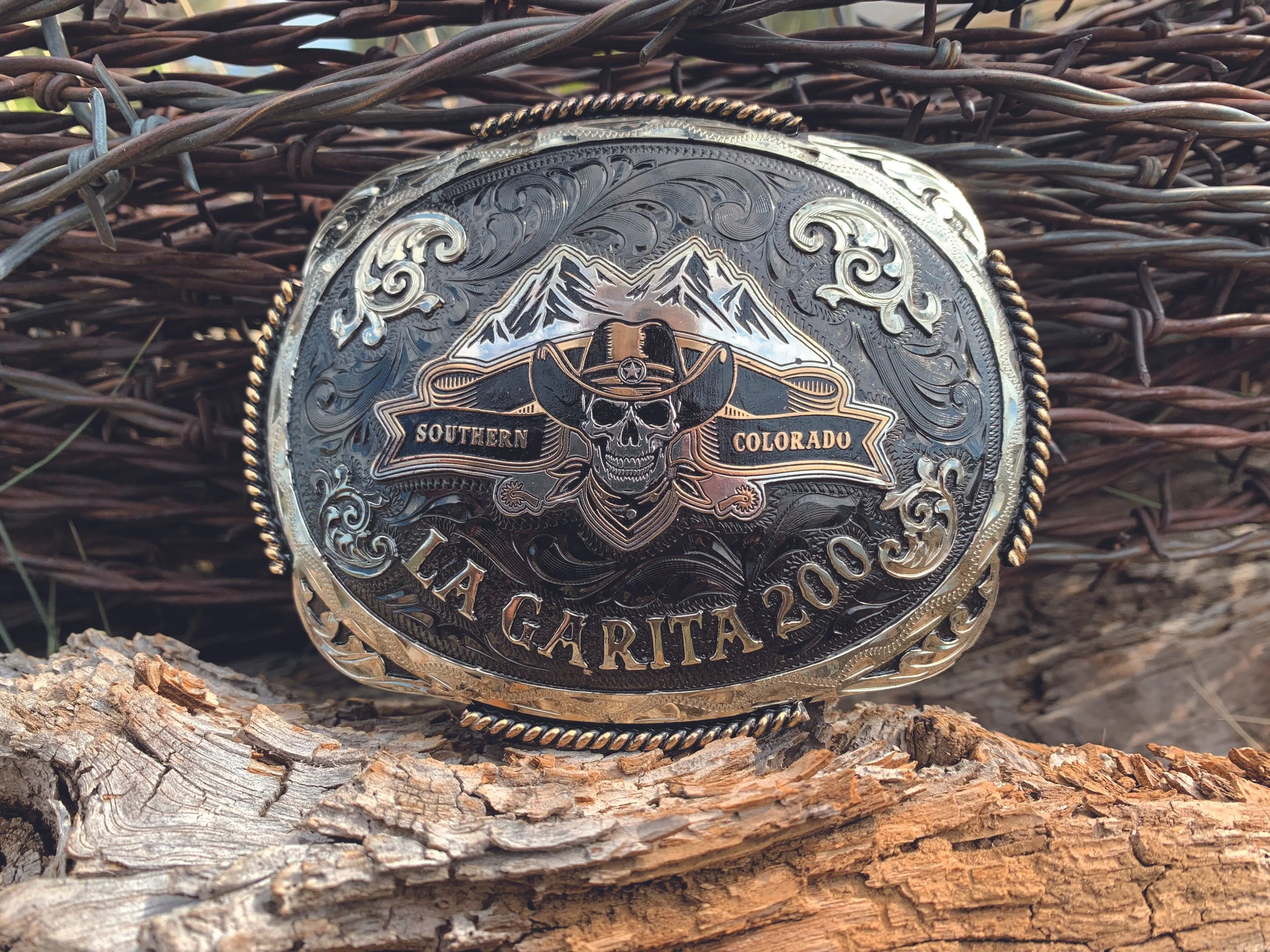
While we sincerely applaud each and every one of you that had the courage to sign up, train and be at the starting line for the race, awards will only be given to those that cross the finish line in the allotted amount of time. Your hard earned belt buckle will be given to you at the finish line. The top female and male finisher will also be awarded their prizes when they cross the line.
ALTITUDE ILLNESSES
High Altitude Illnesses can range from mild to life-threatening. Altitude sickness is the most common and mild form (typically referred to as Acute Mountain Sickness or AMS) and is brought on by climbing to a higher altitude too quickly without allowing time for your body to adjust to the changes in air pressure and oxygen level.
The air above 8,000 feet is “thinner” meaning that each breath you take contains less oxygen than what you’re used to. When your body doesn’t have time to adjust to the lower oxygen levels at higher altitudes, it increases its breathing rate in an attempt to boost the blood’s oxygen, though this is not enough to return it to normal levels.
There are three main (common) altitude illnesses: Acute Mountain Sickness (AMS), High Altitude Cerebral Edema (HACE), and High Altitude Pulmonary Edema (HAPE).
Acute mountain sickness (AMS). This is the mildest and most common form of altitude sickness.
Mild Symptoms:
• Nausea & Vomiting
• Shortness of Breath
• Headaches and/or Dizziness
• Fatigue & Lack of Energy
• Lack of Appetite
• Nosebleeds
Moderate to Severe Symptoms:
• Severe Headaches & Dizziness
• Severe Nausea & Vomiting
• Extreme Fatigue & Weakness
• Chest Tightness or Congestion with Breathing Difficulties
• Coordination & Walking Problems
• Ataxia (symptoms which mimic being drunk like slurred speech)
• Vision Issues
High altitude pulmonary edema (HAPE). This is when altitude sickness affects your lungs, causing them to fill with fluid. It’s a medical emergency that needs immediate medical attention. While not the most severe form, it can cause death faster than other forms of altitude sickness.
Symptoms:
• Shortness of breath, even while resting
• Rapid Breathing
• Chest Pain
• Dry Cough, Changing to a Productive Cough
• Rapid Heart Rate
• Coughing Up Frothy White or Pink Material
• Blue/Grey or Purple Lips and Fingernails (cyanosis)
• Decreasing Level of Responsiveness
High altitude cerebral edema (HACE). This is the most severe form. It happens when altitude sickness causes your brain to swell. It’s a very dangerous condition that needs emergency care.
Symptoms:
• Headaches & Dizziness
• Disorientation & Confusion
• Nausea & Vomiting
• Extreme Lethargy
• Lack of Coorination (Ataxia)
• Loss of Consciousness
TREATMENT
Stop your ascent immediately and descend to a lower altitude where the symptoms abate after a day or two of rest. In severe cases, seek medical treatment immediately.
Animals and Weather
You know how sometimes you get that feeling like you are being watched? Well guess what, you are in the woods and you are not the only ones out there. There is a good chance that something does have an eye or two on you. This course will have you traversing some beautiful country that many critters and creatures call home. While most encounters with our scaly and furry neighbors are non-life threatening, it is in your best interest to have some basic knowledge on your side to keep it that way.
Cows: There are many cows that graze the forest in some of the areas you will be running through. Most of these cows will be lazily lying under trees or out in a meadow grazing. They most likely will run away, but bulls may not. Typically there won’t be bulls with the cows, but if somehow you encounter one give him a very wide space and go way around. If cows are in the trail, you can probably whoop and holler like you’re on a mini cattle drive and they will move off and look at you like you’re crazy; and they are probably right
Rattlesnakes: Rattlesnakes don’t want to hunt you down and bite you. They would much prefer to be alone and stretch out and enjoy the warm sun. Given the chance and time, they most likely will slither away and be on their merry way. They do not have external ears, so they will sense vibration like your footsteps as you approach. In most cases, this vibration will put them on-guard and they will give you their characteristic rattle warning sound. They don't want you to step on them so they usually will do their best to say hey you, stop right there, I’m right here! But Mother Nature did a great job in dressing them, so they blend in very well with the surroundings and if you are bombing down a hill there may not be time for them to communicate with you. So you need to do your part to watch out for them.
Stay Alert and Look Ahead - Always look several yards ahead of you and not just where your next step will be (we are runners so hopefully you already practice this as to not trip over rocks and roots). We do not have a no music policy, but it would be in your best interest to keep your ears open for that very distinct rattle sound. I am guessing you are very near to a phone or computer at this moment, so it you are new to rattlesnakes I’d suggest you pull up a video and familiarize yourself with the sound. Rattlesnakes are good at camouflaging themselves, so ALWAYS look in the grass along the trail and roads if you are stepping aside for another hiker or runner. If you use poles, it’s not a bad idea to poke around before stepping off trail. We joke that there are many good sitting rocks and logs along the trail that we refer to as “ass magnets”, so if you feel the need to take a break look before resting.
Keep Your Distance and stay Calm - If you should come upon a rattlesnake, give it plenty of space. A rattlesnake can strike up to half his body length and if it is coiled, that may be farther than you think. You are big and the snake is small, so it will be scared of you. Stay calm and do not make any quick movements. Slowly back away from the snake and if the snake does not move, you should take a wide route around it (don’t worry we won’t yell at you for cutting the course in this case).
If Bitten - STAY CALM! Seek medical attention immediately.
Elk and Mule Deer: These guys are more likely to scare you while coming around a turn than cause any harm, but like with all wild animals give them their space. They will most likely run off, but bull elk and male deer can be aggressive during mating season.
Moose: Seven feet tall, nearly 1,200 pounds, and capable of running over 30 miles an hour and kicking in all directions (including sideways!), an adult moose is nothing to mess with. Unlike deer or elk, moose are also less likely to steer clear of humans. Don’t expect to scare away a moose the same way you might startle a deer on the trail. We say if you are close enough to get good pictures, you are too close! Your best bet is to know how to avoid triggering an attack. When you come across a moose, do whatever you can to stay out of its way. If something you’re doing is causing it to change its behavior, revise what you’re doing.
If you see a moose, give it plenty of space-at least 50 feet. If needed, create more space by backing away calmly.
Watch for nearby calves. Never come between a cow and her calf.
Look for signs of aggression: raised hair on its neck/back, pinned back ears, and/or constant licking of their lips.
Run away as fast as possible if the moose charges you. It will generally back down once it’s driven you far enough away.
Seek additional protection by ducking behind a large tree, rock, or building.
If attacked and knocked over curl into a ball to protect your head and vital organs. Continue retreating, as is possible.
Bear: Good news! We do not have Grizzly bears here in Colorado, but we do have black bears (which can be black, blonde, cinnamon or brown in color). More often than not, the bear will be scared of you and run off. The bear won’t look at you and think, yay lunch! It’s more often the case that you surprised the bear and it is scared. DO NOT RUN AWAY. If you do come up on a bear, slowly back away and leave the area. Talk loudly or make noise by banging sticks so the bear is aware of your presence.
Bears are most dangerous to you if you startle or surprise them or if you encounter a mother and her cubs. When a black bear feels threatened, it may false charge you. It is best to stand your ground and not run. The bear may stop just short of you and snort, but then leave. If the charge is not false and you find yourself one-on-one with the bear, best thing to do is ball up, cover your head and stomach and play dead for 10-20 minutes. A mother bear is just trying to protect her young, so once you are not a threat she will leave.
Mountain Lions: Mountain lions are stealthy and smart. For the most part, mountain lions want nothing to do with humans and don’t want to be seen. But just because you don’t see them, doesn’t mean they are not there. We have come upon numerous mountain lion and bear kills on the trails over the last year. While mountain lions normally go after smaller sized prey like rabbits and foxes, a mountain lion will take down an elk or deer; so don’t think your size will deter it from thinking yay lunch (unlike the black bear). So if you do encounter a mountain lion, your job is to make it realize you are not lunch.
If you do cross paths with a mountain lion, do not approach it. Give it space to run away because most do not want a confrontation.
Stay calm and talk to it in a firm voice. Your job is to convince it that you are not prey. So unlike prey, DO NOT RUN AWAY or turn your back to the animal.
Back away slowly. Face the lion and make yourself look as large as possible by opening your jacket or raising your pack or sticks to make yourself look like a large formidable opponent.
If the lion walks towards you or becomes aggressive, shout sternly and throw rocks, sticks or anything you can grab. If it should charge, mountain lions do not bluff. Fight back with everything you have. Your job is to convince it that you are not worth it.